I started reading this article on Kobold Quaterly about travel spells and the difficulty they present to GM's at times and an idea gated into my head, which partially solves in from the point of teleport-like magic. I've not finished reading the article itself yet, so it may well match their solution too, however I suspect theirs is a less brute force approach.
The Hadoopites
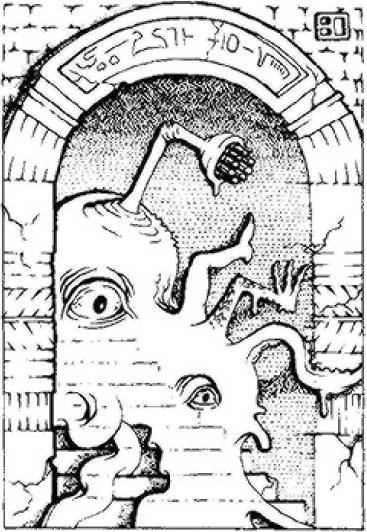
Hadoopites are abberant beings that exist between realities. They lurk in the flaws of geometry, and hunt travelers who dare to shortcut normality. In appearance they look something a little like elephants, with too many eyes and whipping hook tentacles for trunks. Not being made of earthly flesh, they exhibit jelly like properties and are most often yellow, until they have fed when they turn a dull green.
Hadoopites can latch onto those that use teleport and gate magic, and drag them into a null zone where they attack and devour them. Worse, Hadoopites over time learn to recognize the psychic signatures of their victims, thus every time a Wizard uses such magic they increase the chance of an attack.
Mechanics.
Each time an individual travels by use of major teleport magic, such as the teleport spell, teleport circles, gates, etc,. there is a 1% accumulative chance that the traveler and their party are dragged into an indistinct misty realm, where shortly after the Hadoopites attack. Each extra traveler increases the chance by 1% at the time of travel, although that isn't accumulative. Thus a wizard who activates a teleport circle, who has previously used teleport magic 6 times and travels with a party of 4 others has an 11% chance of attracting the attention of Hadoopites. 6% base, 1% for himself and 4% for his companions. The next time he uses the magic, he'll have a base of 7%.
If the travelers defeat the Hadoopites, they complete their journey and the base chance is halved.
(Note, GM's with software developers and system ops players may want to rename these creatures. Hadoopites hunt in packs called clusters.)
Agile software engineering, roleplaying game world creation, rules hacking, wargaming and geekry.
Wednesday, 29 February 2012
Monday, 27 February 2012
The Lure Of Chaos, or Plan B From Outer Space
After reviewing my Brass Wardens yesterday I realized there was no way I'd manage to paint all that I needed to before the Spikey Grand Campaign 2 day 40K tournament. I've brass based about 7 Terminators, but I still had so much to do, including the Inquisitor Kill Team, and I'm going to Copenhagen this weekend, so I'm unlikely to have any serious time to get it done.
So I've fallen back on my Nurgle Chaos Space Marine army, although this time I'm stripping off the Nurgle theme. With this in mind, I've decided to take a Greater Daemon and some Khorne Beserkers, which I put together last night. I'm much happier spray basing these beserkers, ink washing, dipping and highlighting than the more delicate Brass Wardens, which I'm taking my time with. I've still got to build two more Rhinos, one for the regular marines and one for the beserkers, but they also can be done quickly.
All in all, I'm surprised how much stress this was causing me and the relief yesterday once I'd made the decision made for a fun and relaxing modelling session rather than a panicked on, was palpable.
Tuesday, 21 February 2012
Last Temple Of The Spider God
Before the rise of demon goddess of the dark elves there was a great primal spider god beast called Aranith. Ancient humans worshiped Aranith and built underground temples to it, to gain favour and protection from spiders.
The cultures that followed the spider god dwindled, while the demon goddess grew in power and sent her minions to destroy all traces of Aranith. However the god beast managed to protect and hide it's high temple, deep within the jungles of the south. An ancient clay map has somehow ended up in possession of the adventurers, that speaks of the location of the temple as well as the treasures and dangers that lurk within. Unknown to the adventurers dark elves have managed to open a magical gateway into the inner temple and are also in the process of exploring the temple from within.
The temple is a dungeon built vertically rather than not horizontally, and the party must contend with immortal guardians, mummified spiders, traps and the deadly mystic wells that are found throughout temple. Bring rope, a lot of rope.
Last Temple Of The Spider God is a high level OSRIC adventure.
The cultures that followed the spider god dwindled, while the demon goddess grew in power and sent her minions to destroy all traces of Aranith. However the god beast managed to protect and hide it's high temple, deep within the jungles of the south. An ancient clay map has somehow ended up in possession of the adventurers, that speaks of the location of the temple as well as the treasures and dangers that lurk within. Unknown to the adventurers dark elves have managed to open a magical gateway into the inner temple and are also in the process of exploring the temple from within.
The temple is a dungeon built vertically rather than not horizontally, and the party must contend with immortal guardians, mummified spiders, traps and the deadly mystic wells that are found throughout temple. Bring rope, a lot of rope.
Last Temple Of The Spider God is a high level OSRIC adventure.
Sunday, 19 February 2012
The Necromancer
I've been re-reading the Advanced Dungeons and Dragons Players Handbook, as I've being toying with the idea of doing an old school D&D version of Star Trap. It gave me the idea for a Necromancer class using solely the PHB.
The Necromancer.
Based on the Magic User class, the Necromancer studies dark texts which lead to magical spells that work very much like clerical magic. The study is difficult and taxing, and the Necromancer is forced to forgo the study of some schools of magic.
Necromancers have ability requirements, saving throws, hit points and gain levels just as a magic user. They wield weapons in the same manner to, although through the connection leather has to the dead, a special ritual allows them to wear specially prepared necromantic leather armour.
Only humans and half orcs live lives short enough to allow them a connection the necromatic arts in such a significant manner. Half orcs may indeed be Necromancer/Assassins, but are restricted still to necromatic leather armour. Half orcs are limited to levels as Necromancers as elves are to magic users .
Necromancers are either neutral or evil in outlook. Neutral necromancers must make a percentage roll every time the gain a level to see if they are corrupted by their increasing powers. If they roll equal to or under their level, they become evil. Thus a chaotic neutral Necromancer changes to chaotic evil on a% roll of 01 or 02 when he becomes 2nd level and at 10th level a roll of 10 or less will have the effect. Evil Necromancers must also roll in the same manner but if they roll equal to or below their level they loose a point of charisma.
Necromancers may only learn necromantic, abjuration, divination, summoning/conjuration and alteration schools of magic user spells. They may cast necromantic clerical spells, but always the reversed versions, as if they were magic user spells. In addition to the necromantic clerical spells, a necromancer may learn Cause Disease, Unholy Word and Bestow Curse. When casting Monster Summoning spells, they monsters summoned are always undead.
The necromantic leather armour that Necromancers may wear is made from the skins of intelligent creatures and requires ritual that costs 50 g.p. in extra material components. Most leather workers would be horrified to create such a suit, so specialists must be sought out. Once made, the armour maybe enchanted as normal. Magical leather armour that is found is necromantic 2% of the time.
The Necromancer.
Based on the Magic User class, the Necromancer studies dark texts which lead to magical spells that work very much like clerical magic. The study is difficult and taxing, and the Necromancer is forced to forgo the study of some schools of magic.
Necromancers have ability requirements, saving throws, hit points and gain levels just as a magic user. They wield weapons in the same manner to, although through the connection leather has to the dead, a special ritual allows them to wear specially prepared necromantic leather armour.
Only humans and half orcs live lives short enough to allow them a connection the necromatic arts in such a significant manner. Half orcs may indeed be Necromancer/Assassins, but are restricted still to necromatic leather armour. Half orcs are limited to levels as Necromancers as elves are to magic users .
Necromancers are either neutral or evil in outlook. Neutral necromancers must make a percentage roll every time the gain a level to see if they are corrupted by their increasing powers. If they roll equal to or under their level, they become evil. Thus a chaotic neutral Necromancer changes to chaotic evil on a% roll of 01 or 02 when he becomes 2nd level and at 10th level a roll of 10 or less will have the effect. Evil Necromancers must also roll in the same manner but if they roll equal to or below their level they loose a point of charisma.
Necromancers may only learn necromantic, abjuration, divination, summoning/conjuration and alteration schools of magic user spells. They may cast necromantic clerical spells, but always the reversed versions, as if they were magic user spells. In addition to the necromantic clerical spells, a necromancer may learn Cause Disease, Unholy Word and Bestow Curse. When casting Monster Summoning spells, they monsters summoned are always undead.
The necromantic leather armour that Necromancers may wear is made from the skins of intelligent creatures and requires ritual that costs 50 g.p. in extra material components. Most leather workers would be horrified to create such a suit, so specialists must be sought out. Once made, the armour maybe enchanted as normal. Magical leather armour that is found is necromantic 2% of the time.
Wednesday, 15 February 2012
History Of The Star Trap Dungeon
Smulhahoozin The Cowled, a primeval wizard of near godlike powers, was fighting a war against the great aberrant race in the dim depths of the past. During one of her forays into the underdark, she came across a wall of something that reeked of madness and the powers of the Far Realm. Her insatiable curiosity caused her to pause awhile to study the discovery. During this time she found the outsiders avoided the locale around the wall and because of this she built an underground fort at the site. Summoning her elemental servants to carve out much of the the rock around the wall she found it rose up further than she imagined, so she sent earth spirits out to detail the size of the barrier while she studied it further. Notorious for her impatience she never the less took her time and was careful to not let the radiant madness infect her. She summoned about her mind-mages, who were greatly disturbed by the object she now named The Obelisk Of Insanity. Some of these psionists died, went insane or were killed in mysterious circumstances while in study of the huge edifice. Eventually she gave custody of the Obelisk over to one of her thirteen daughters, Toolizith. Determined to win notoriety, Toolizith pressed ahead quickly and wantonly with further research, finally coming to the conclusion that the Obelisk could be used as some sort of cage and was built from the very stuff of the Far Realm. During this period her attendants fought battles with terrible beings that seem to slip into reality unnoticed near the Obelisk and the growing halls took on a more martial and defensive nature. Never the less Toolizith pondered what great entity she could catch and bargain with using the Obelisk. Eventually she decided to entice and capture a star being of immense power. It took a century for her preparations to unfold, during which she became more and more secretive and obsessive. It is even rumoured that she took to talking to the Obelisk alone for days at a time. Eventually her rituals were complete and as the stars aligned themselves as predicted, she rang a silver bell that called great Zhulbluhb'Tck'Nere, known as The One Who Gathers Whispers to astrologists. Surrounded by both arcane and psychic adepts, she fought a tremendous battle, both in the world and beyond but after much destruction on many planes, she willed Zhulbluhb into the Obelisk. Before she could recover her wounds and powers the soon to be god of secrets appeared with his then faithful servant and together they attacked and slew Toolizith, so that she might not learn the long forgotten whispers the star being could reveal. Events so mythically tremendous caused warps in reality and these two battles in such short periods of time created patches of magical and elemental oddity throughout the region.
Toolizith's followers were broken and fled, burying their leader in her own dungeon, setting traps and leaving immortal guards behind them as then left. Over the centuries that followed the dungeon has grown, both by those wishing to learn the secrets of it's deepest vaults and by others who use it as a home, a tomb or a hunting ground.
The Gatherer is still bound to the Obelisk Of Insanity, whispering promises to those that will listen, while the undead Toolizith rages in her tomb, waiting too to be freed.
Toolizith's followers were broken and fled, burying their leader in her own dungeon, setting traps and leaving immortal guards behind them as then left. Over the centuries that followed the dungeon has grown, both by those wishing to learn the secrets of it's deepest vaults and by others who use it as a home, a tomb or a hunting ground.
The Gatherer is still bound to the Obelisk Of Insanity, whispering promises to those that will listen, while the undead Toolizith rages in her tomb, waiting too to be freed.
Monday, 13 February 2012
One In Six
This photo shows the rolls from my spectacularly bad, and rather important Psycannon rolls from a 40K game I played recently. I needed 3+
My friend and comrade is an excellent Warhammer 40K player. In the games that he plays he rarely looses, and he often does very well in the competitions we go to, where it's not enough to just win every game, you have to win well.
He is very good strategist, however I think he'd admit that he is still learning and doesn't always play to the mission - the biggest mistake in 40k. However, without even knowing it I think he is a walking stats engine and he designs army lists that really play to W40K's threat range, 1-6. In most combat situations there are 3 dice rolls to determine the outcome, a to-hit roll, a to-wound roll and an armour save. Occasionally there is also a feel no pain roll, but it's relatively rare. Again except in extreme circumstance even the weakest attacks will score a wound on an enemy on 2 sixes and a one (for armour). This represents a very clumsy, very weak foe striking someone in terminator or equivalent armour. That's 1 in 373 odds and if you're rolling hundreds of dice, it happens. Normally however each roll has 2/3 or 1/2 chance until you get to armour, where it swings much more wildly. In small 'elite' units, changing from 2/3 to 1/2 is important but doesn't actually end up producing that many extra hits. However if you can roll 60, 80 or more dice in an assault it makes a huge difference and this is where his skill and intelligence comes in. He is really good a picking army lists that rolls lots of dice with decent odds. This generally means he runs 'horde' lists, if not horde based armies.
But the very best thing about his lists, and himself, is that they are fun to play. He doesn't swamp his lists with repeat choices, he names each HQ and champion and more often than not acts 'in character' when playing each one. His pirate Orks are hilarious and his armies always have a story behind them.
Still, he has so much painting to do! Ha. In your face!
My friend and comrade is an excellent Warhammer 40K player. In the games that he plays he rarely looses, and he often does very well in the competitions we go to, where it's not enough to just win every game, you have to win well.
He is very good strategist, however I think he'd admit that he is still learning and doesn't always play to the mission - the biggest mistake in 40k. However, without even knowing it I think he is a walking stats engine and he designs army lists that really play to W40K's threat range, 1-6. In most combat situations there are 3 dice rolls to determine the outcome, a to-hit roll, a to-wound roll and an armour save. Occasionally there is also a feel no pain roll, but it's relatively rare. Again except in extreme circumstance even the weakest attacks will score a wound on an enemy on 2 sixes and a one (for armour). This represents a very clumsy, very weak foe striking someone in terminator or equivalent armour. That's 1 in 373 odds and if you're rolling hundreds of dice, it happens. Normally however each roll has 2/3 or 1/2 chance until you get to armour, where it swings much more wildly. In small 'elite' units, changing from 2/3 to 1/2 is important but doesn't actually end up producing that many extra hits. However if you can roll 60, 80 or more dice in an assault it makes a huge difference and this is where his skill and intelligence comes in. He is really good a picking army lists that rolls lots of dice with decent odds. This generally means he runs 'horde' lists, if not horde based armies.
But the very best thing about his lists, and himself, is that they are fun to play. He doesn't swamp his lists with repeat choices, he names each HQ and champion and more often than not acts 'in character' when playing each one. His pirate Orks are hilarious and his armies always have a story behind them.
Still, he has so much painting to do! Ha. In your face!
Monday, 30 January 2012
Thieves World 4e - troupe style
I'm putting together a 4e campaign around a group of siblings, I suspect brothers, as they build a thieves guild in the city of Greyhawk for the HATE crew. It's inspired by a little by Ars Magica, Fafhrd & the Grey Mouser and of course Thieves World. There is lots of the Sopranos and The Godfather thrown in too, but with some dungeoneering now and again for good measure.
I'm hoping that it'll hang together well, if loosely, as it will be very character driven rather requiring lots of DM work, which I just don't have enough time for and also allows for players to come and go without huge impact on the running of the stories.
Tuesday, 24 January 2012
Hooked up with Google+
I thought I'd see what Google+ was like and hook up Illusionary Terrain to see how they worked together.
Sunday, 22 January 2012
School clubs, wargames vs roleplaying
While playing Carcassonne with my daughter and partner last
night I was talking them about how I got into roleplaying and my daughter
mentioned there was a Warhammer club at school. I think it’s a something of a
shame that wargaming has taken back it’s position within schools as the major
hobby game.
Now I like Warhammer and I play W40K a great deal, as well
as involving and enjoying myself in modelling side of the hobby but I think it
serves children and young adults far less than roleplaying. When I was a
school, when perhaps Dungeons & Dragons was at its peak in the UK, there
were 4-5 active groups in the afterschool club and the one I joined meant I
made some life long friends. I’m sure this is true of wargamers too, but
roleplaying helped teach me how to co-operate with a group of people with
differing needs and desires and achieve those goals together, which is fundamentally
what cooperative adventure gaming is. This is an ability that has helped me in
my career and private life far more than being a strong competitive and
tactical thinker. Co-operating with people with different goals to mine in a way that makes everyone happy happens every single day and I think it’s a shame
that more schools, parents and games companies can’t come together in the same
way that Games Workshop manages to do to bring roleplay gaming to children.
If I lived closer to her school I think I’d get a great deal
out of running a roleplaying club there, although I’m not convinced she’d stay
playing for long, but she would be more interested in it that the Warhammer
club, at which there are no girls I believe.
Wednesday, 11 January 2012
Critical hits and Instant Death - for a Hit Dice based game near you
Critical hit and instant death.
Weapons have a critical threat range, which indicates how likely they are to do serious damage. If the threat range is 19-20 it means that if the d20 used to hit scored a 19 or 20 a critical hit has occurred. If the creature struck had only 1 Hit Dice (HD) point it’s reduced to 0 hit points immediately, which probably causes instant death. If it has more than one HD point rolling another d20 and if that roll too was a critical then drop the creatures hit points to 0 hp, and repeat if there are yet more hit dice until a critical isn’t rolled or all threshold . Note that if the roll needs to have hit the opponent to score a critical hit unless a 20 is rolled. 20’s always hit.
The basis for this is that weapons do two types of damage. Instantly fatal damage such as stabbing through the heart that requires precision to kill. Attrition damage, for example bone crushing and muscle damage, allows the wounded to fight on but eventually slays the individual. Attrition damage is generally more easy to achieve.
Example
Drogan, a dwarf armed with a battle axe (+1 to hit, 1d10 damage, crit threat 19+) is fighting a Dreadtouch Megapede which has 12 hit points from 3 Hit Dice. He rolls a 20 to hit, which is a critical. As the Megapede has 3 hit dice it needs 3 crits to instantly kill it. He rolls a 19 but then a 14. The 14, although it hits, isn’t enough to drop his foe to 0 hp immediately. However he rolls 3d10 for damage, 2 for crits and one for the finally successful hit.
Weapons - a rough guide
Daggers are moderately easy to use, do low damage but have a high crit range.
+1, 1d4, 17+
Swords are moderately easy to use, do medium damage and have a good hit range.
+1, 1d8, 18+
Axes are average to use, do high damage and have an average critical hit range
+0, 1d10, 19+
Clubs, Maces and hammers are easy to use, do better than average damage and have a low crit range.
+3, 1d8+1, 20
Spears are moderately easy to use, do medium damage, have an average crit range. They gain a +1 bonus to initiative and have a range of 1 in hand to hand.
+1, 1d8, 19+
Missile weapons generally are average to use, do average damage and have a good crit range.
+0, 1d8, 18+
Spells that target single opponents generally have a average crit range (19+) while area affect spells cause critical hits rarely (20) if they roll to hit.
From this you can see why those people who are poorly trained in combat or are fighting well armoured foes pick crushing weapons like maces, which hit more often at the cost of reduced chances of instant death. Feats, powers, spells etc,. might increase the crit range of attacks.
Creatures and Hit Dice
Most humanoid use 1d6 to determine their hit points, humanoids are more vulnerable to damage than many animals or magical beasts, which use 1d8. Some creatures are brittle but difficult to put down, like skeleton warriors, who have 2 or more hit dice but only 1d4 for hit points, while others are tough but vulnerable, like zombies who use 1d12 for hit points but only have a single hit dice.
It’s perfectly reasonable for GMs to average and round up for creatures when writing adventures rather than rolling all creatures hit point that feature in a dungeon.
Weapons have a critical threat range, which indicates how likely they are to do serious damage. If the threat range is 19-20 it means that if the d20 used to hit scored a 19 or 20 a critical hit has occurred. If the creature struck had only 1 Hit Dice (HD) point it’s reduced to 0 hit points immediately, which probably causes instant death. If it has more than one HD point rolling another d20 and if that roll too was a critical then drop the creatures hit points to 0 hp, and repeat if there are yet more hit dice until a critical isn’t rolled or all threshold . Note that if the roll needs to have hit the opponent to score a critical hit unless a 20 is rolled. 20’s always hit.
The basis for this is that weapons do two types of damage. Instantly fatal damage such as stabbing through the heart that requires precision to kill. Attrition damage, for example bone crushing and muscle damage, allows the wounded to fight on but eventually slays the individual. Attrition damage is generally more easy to achieve.
Example
Drogan, a dwarf armed with a battle axe (+1 to hit, 1d10 damage, crit threat 19+) is fighting a Dreadtouch Megapede which has 12 hit points from 3 Hit Dice. He rolls a 20 to hit, which is a critical. As the Megapede has 3 hit dice it needs 3 crits to instantly kill it. He rolls a 19 but then a 14. The 14, although it hits, isn’t enough to drop his foe to 0 hp immediately. However he rolls 3d10 for damage, 2 for crits and one for the finally successful hit.
Weapons - a rough guide
Daggers are moderately easy to use, do low damage but have a high crit range.
+1, 1d4, 17+
Swords are moderately easy to use, do medium damage and have a good hit range.
+1, 1d8, 18+
Axes are average to use, do high damage and have an average critical hit range
+0, 1d10, 19+
Clubs, Maces and hammers are easy to use, do better than average damage and have a low crit range.
+3, 1d8+1, 20
Spears are moderately easy to use, do medium damage, have an average crit range. They gain a +1 bonus to initiative and have a range of 1 in hand to hand.
+1, 1d8, 19+
Missile weapons generally are average to use, do average damage and have a good crit range.
+0, 1d8, 18+
Spells that target single opponents generally have a average crit range (19+) while area affect spells cause critical hits rarely (20) if they roll to hit.
From this you can see why those people who are poorly trained in combat or are fighting well armoured foes pick crushing weapons like maces, which hit more often at the cost of reduced chances of instant death. Feats, powers, spells etc,. might increase the crit range of attacks.
Creatures and Hit Dice
Most humanoid use 1d6 to determine their hit points, humanoids are more vulnerable to damage than many animals or magical beasts, which use 1d8. Some creatures are brittle but difficult to put down, like skeleton warriors, who have 2 or more hit dice but only 1d4 for hit points, while others are tough but vulnerable, like zombies who use 1d12 for hit points but only have a single hit dice.
It’s perfectly reasonable for GMs to average and round up for creatures when writing adventures rather than rolling all creatures hit point that feature in a dungeon.
And so a new chapter is born - Brass Wardens
I have to admit this is likely to be most Green Elf* army, although I'm still going for models and units I like rather than because they are the best that can be fielded. Except for the Rifleman Venerable Dreadnought, admittedly though I'm using a Contemptor Forgeworld model for that though.
*AKA munchkin. In Gauntlet 2, the Green player who chooses the Elf character is closest to the first potion. This was worked out by one of my D&D group back in the day. He still gets called a Green Elf sometimes.
Tuesday, 6 December 2011
Bookhounds of New Crobuzon
After reading Ken Hite's excellent Bookhounds Of London I'm daydreaming about running a Bookhounds mashup of Ars Magica set in New Crobuzon.
The players would take the role of a magical bookshop's guards, bookfinders and sellers as well as alchemists and ingredient sourcers. So many games, so little time.
Thursday, 22 September 2011
The Chained God's Tabernacle
In a hidden oubliette layer of Star Trap, many levels down lies a temple to the Chained God. It sits suspended in a huge cave above a black sea. Vast taut chains keep the inverted pyramid held in place. A long straight passage leads to the cave and ends where one of the chains is fastened to the rock wall. The links are twenty feet wide and where the vertical meet horizontal links odd, oversized steps are etched into the cold metal. The upper surface of the stone pyramid is bare, save for a large circular plug that must lead to the interior.
Tuesday, 20 September 2011
What's the Star Trap Dungeon?
Megadungeon means many things to many people, and has various subtle overtones. My straight up definition of a megadungeon is that it is...
- A large network of small scale locations. Technically underground, but that's not an absolute.
- A place large enough in scale and story to run a whole campaign within it.
- Encounters are not linear in power.
- Areas can and should be devoid of hugely interesting features.
- Things that eat each other do not live next to each other.
- The party can find friends or at least temporary allies within the depths.
- Players should feel that death might lurk around the next corner.
Friday, 16 September 2011
Day Zero, basic map
Here is a map drawn in about 15 minutes using Campaign Cartographer 3 it shows in the simplest of terms of the Skyelund region and acts as the basic players map. Currently it displays the Old Road and the mysterious and cursed Isle Of Zyphan.
Subscribe to:
Comments (Atom)